Italian Coffee Rituals at Home: How to Pair Coffee Candles with After-Dinner Espresso
A practical guide to pairing coffee candles with after-dinner espresso, from scent choices and placement...

Coffee candles are an odd gift for someone who doesn't drink coffee. The logic sounds backwards until you picture the scene: a room that smells like the first hour of a café, with no cup in sight. Plenty of non-drinkers love that smell. They just don't want it served in a mug.
That is exactly why coffee gift sets deserve a more careful eye than the average scented candle. The wrong pick smells like scorched espresso or a dessert menu; the right one turns a small room into a warm corner of a bar. What follows is the checklist worth running through before you pay.
Non-drinkers usually fall into two camps. Some want the full café aroma — dark, roasted, faintly bitter, the smell of walking past a bar at seven in the morning. Others like coffee only once it has been softened into something else: vanilla, cocoa, amber, a spoon of caramel.
If you don't know which camp your recipient sits in, the supporting role is the safer bet. Coffee that sits behind vanilla or tonka reads as cozy rather than kitchen-like, and it suits more homes. A straight, heavy roast scent is a confident gift — wonderful for the right person, quietly relocated to the bathroom by the wrong one.
Two simple questions get you most of the way. Does she order dessert? Does he keep dark chocolate in a drawer? A yes to either suggests the creamier blends will land well. Someone who keeps a clean, floral or citrus-forward home will probably prefer coffee as a whisper.
Scent names are marketing, but they are also a rough map. It pays to learn the vocabulary before you start comparing jars.
Words like "espresso," "dark roast" and "burnt sugar" point toward intensity, and sometimes toward bitterness. That can be exactly right — but for a non-drinker it is a gamble. "Latte," "mocha," "macchiato," "affogato" and "tiramisu" all imply cream and sweetness, which is usually the softer introduction.
Check whether the listing names a full scent family rather than a single note. Gourmand tells you to expect food-adjacent sweetness; woody or amber suggests something drier and more grown-up. If the seller describes the candle as "coffee and vanilla" or "roasted coffee with cocoa and tonka," you already know the coffee is being rounded off rather than shouted.
When in doubt, ask. Small candle makers tend to answer messages personally, and one question — "does the coffee come through sharp, or is it softened by something sweet?" — will tell you more than a paragraph of product copy.
Cold throw is what you smell with the lid off and no flame; hot throw is what fills the room once it is burning. They are not the same, and a candle that smells promising in the jar can turn out shy. Since you may be buying without sniffing, lean on the details that are actually observable.
Wax choices — soy, coconut, blends, paraffin — matter less than how well the candle actually burns and carries scent. A coconut-soy blend often gives a clean, even burn; beeswax can compete with a fragrance and mute it. Don't be a snob about the label; read the burn.
Wick type shapes the experience. Cotton wicks are unfussy. Wood wicks crackle pleasantly but need more trimming and can be temperamental in a cool room. Whichever you choose, compare jars by listed burn hours rather than by height, and prefer sets whose candles tell the recipient how to start: trim the wick to roughly half a centimetre, and on the first burn let the wax melt all the way to the edge. A candle that tunnels on night one teaches the recipient nothing about your taste as a gift-giver.
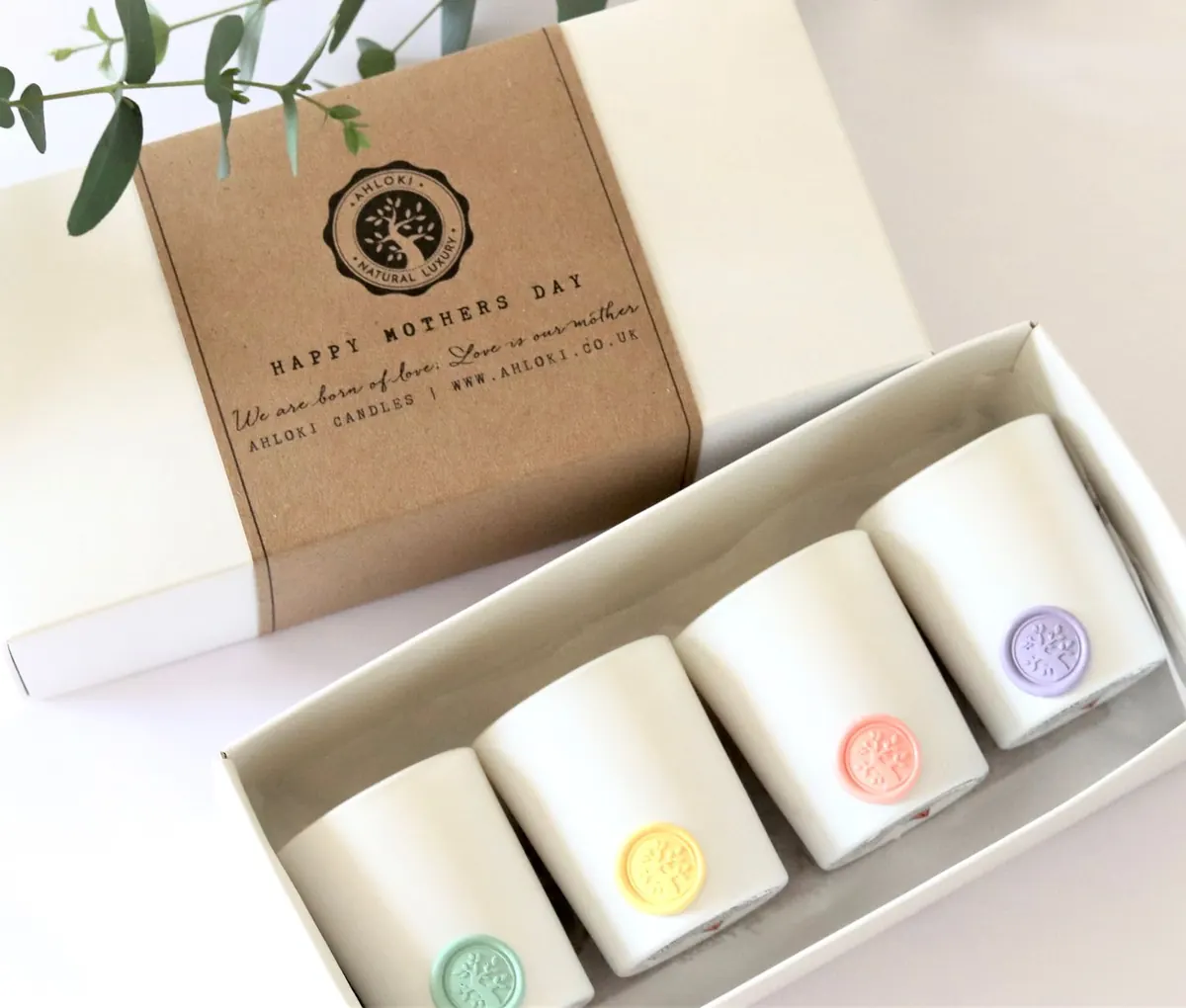
A set is a small piece of design. The good ones give the recipient options, not homework.
That note does more work than the packaging. "This smells like the bar on the corner where we stood in the rain" turns a candle into a memory. One caution: resist adding a bag of beans. For someone who doesn't drink coffee, that is a polite burden, not a bonus.
Wax softens in transit during warm months, so ask for tracking and make sure someone is home to bring the parcel inside rather than leaving it on a sunny step. Check whether the box is gift-ready, and read the exchange policy — most sellers accept unburned candles, and knowing that in advance removes the risk of a scent that misses.
Look for clear labelling: ingredients, fragrance allergens and safety instructions. A seller who lists these openly is usually a careful one. Fragrance is a personal matter, so if the recipient has asthma, allergies, is pregnant, or shares a home with birds or other sensitive pets, ask before you gift. Where a genuine allergy or respiratory condition is involved, check with a doctor rather than relying on a product label.
If those six answers line up, buy it. A coffee candle given to someone who doesn't drink coffee is a small, affectionate joke — and done well it says exactly the right thing: I know you don't drink this, but I know you love the smell of the place that serves it.
Photo: Ahloki / Pexels
A practical guide to pairing coffee candles with after-dinner espresso, from scent choices and placement...
Cold throw, hot throw, wax blends and vague label claims: a practical guide to judging how strongly a...
Pair seasonal coffee candles with the right mug and a simple treat to turn a small gift into a cozy...